
Renaissance Fusion e la corsa all’energia pulita: intervista al CEO Sam Guilaumé
Con sede a Grenoble, Renaissance Fusion lavora per trasformare la fusione da ambizione scientifica di lungo periodo a soluzione industriale ed energetica concreta, combinando stellarator, magneti superconduttori ad alta temperatura e tecnologie a metalli liquidi
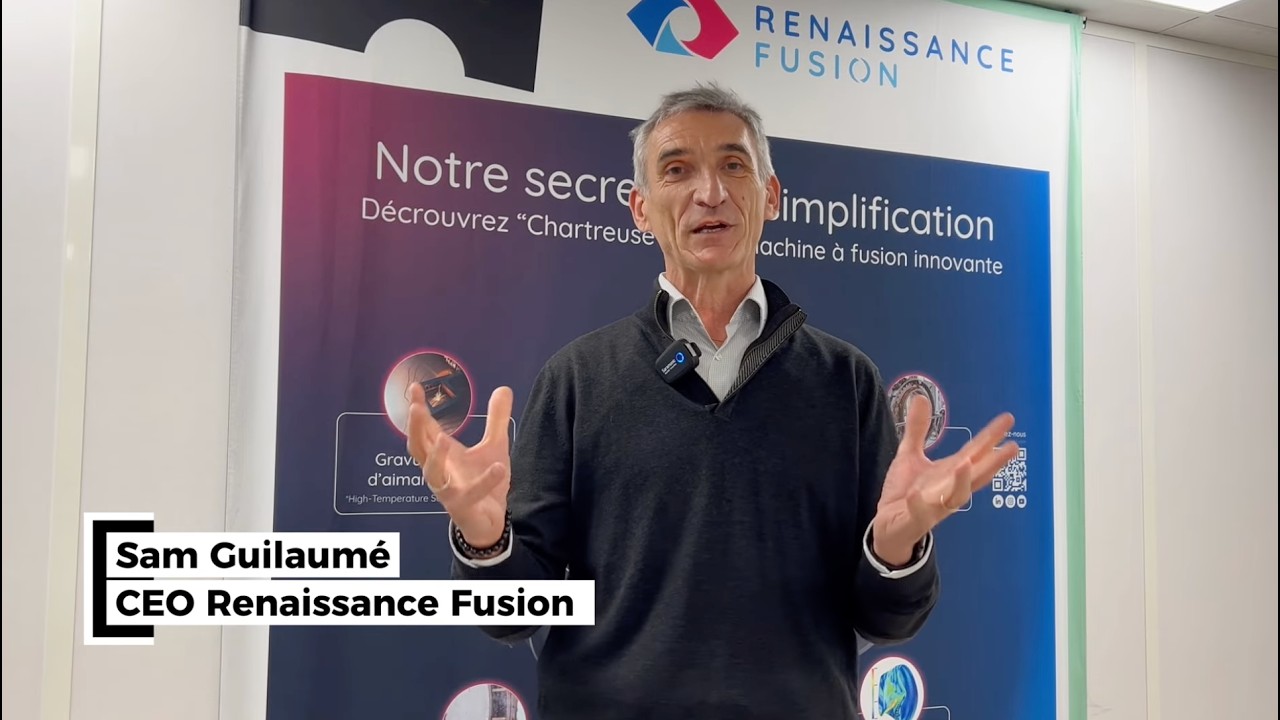
La fusione viene spesso raccontata come una delle grandi promesse del futuro, ma secondo Sam Guilaumé, CEO di Renaissance Fusion, il vero punto di svolta è che la fusione è oggi diventata una sfida industriale.
In questa intervista, Guilaumé spiega perché l’azienda abbia scelto di puntare su uno stellarator semplificato, perché la sovranità della supply chain conti quanto il design del reattore e perché tecnologie abilitanti come i magneti superconduttori ad alta temperatura e i sistemi a metalli liquidi siano già oggi centrali nel futuro dell’energia.
Il messaggio è chiaro: se la fusione vuole diventare affidabile, commerciabile e strategicamente rilevante, il momento di costruire quel futuro è adesso.
GRENOBLE — Attorno alla fusione si è costruita per anni una doppia narrazione: da una parte il fascino di una fonte quasi illimitata di energia pulita, dall’altra il sospetto che resti sempre un traguardo spostato più avanti nel tempo. Ma secondo Sam Guilaumé, CEO di Renaissance Fusion, questa visione oggi non basta più.
La vera domanda, sostiene, non è più se la fusione possa funzionare sulla Terra, ma quando diventerà industriale, prevedibile e commercialmente sostenibile. Ed è proprio in questo passaggio, dalla scienza all’industrializzazione, che Renaissance Fusion vuole collocarsi.
L’energia da fusione viene spesso descritta come una delle più grandi speranze a lungo termine per l’energia pulita. In parole semplici, che cosa sta cercando di realizzare Renaissance Fusion e perché è importante proprio adesso?
Sam Guilaumé: Quello che fa Renaissance Fusion è industrializzare le macchine a fusione. La fusione è stata una corsa di lungo periodo e, per molto tempo, è stata essenzialmente un’attività scientifica. Questo lavoro è iniziato circa ottant’anni fa. Oggi, però, abbiamo la prova che la fusione può essere realizzata sulla Terra, e questa dimostrazione continua a essere confermata in diverse parti del mondo.
La domanda, quindi, non è più se la fusione sia possibile, ma quando avverrà. È qui che vogliamo giocare la nostra partita. Vogliamo fare in modo che la fusione diventi prevedibile, industriale e commercialmente sostenibile. Questo è ciò che conta per noi. La fusione rappresenta la promessa di un’energia abbondante e con pochissimi vincoli geopolitici, perché il combustibile può essere accessibile praticamente ovunque. A quel punto, ciò che conta davvero è padroneggiare la tecnologia della fusione — ed è ciò che stiamo sviluppando qui, tra Francia e Italia.
La vostra azienda lavora sugli stellarator, una tecnologia meno nota al grande pubblico rispetto ad altri concetti di fusione. Che cosa rende questo approccio particolarmente promettente?
Sam Guilaumé: Quando si parla di confinamento magnetico, esistono principalmente due approcci. Il primo è il tokamak, che molti conoscono perché lo si associa a ITER, il grande progetto di collaborazione internazionale. L’alternativa è lo stellarator.
Si può dire che il tokamak sia più semplice da costruire, ma più difficile da operare. Lo stellarator, al contrario, è più complesso da costruire ma più semplice da far funzionare. Quello che noi abbiamo sviluppato è uno stellarator semplificato, che unisce alcuni vantaggi di entrambi: la relativa semplicità costruttiva del tokamak e la facilità operativa dello stellarator. È questo che, secondo noi, rende l’approccio particolarmente promettente.
Renaissance Fusion non sta lavorando solo al futuro reattore, ma anche a tecnologie come magneti superconduttori e sistemi a metalli liquidi. Quanto sono importanti queste soluzioni per avvicinare la fusione alla vita reale?
Sam Guilaumé: Sono due componenti assolutamente critiche, e non soltanto per il nostro design. Saranno importanti anche per altri progetti di fusione. Se pensiamo a un’automobile, potremmo dire che sono come il motore: elementi essenziali.
Questo significa che non contano solo dal punto di vista del progetto, ma anche da quello della supply chain. L’accesso a questi componenti e la capacità di gestirne la catena di approvvigionamento sono fondamentali. Si parla spesso della fusione come di una strada verso la sovranità energetica. A nostro avviso, questa promessa dovrebbe estendersi all’intera filiera. L’ambizione reale è recuperare sovranità dal basso: dai materiali critici alla costruzione della macchina, fino alla sua operazione e manutenzione. È questa la promessa che Renaissance Fusion sta perseguendo.
Lei è arrivato in Renaissance Fusion dopo molti anni in altri settori high-tech. Quali lezioni del suo percorso ritiene più utili oggi per guidare un’azienda impegnata in una sfida scientifica così complessa?
Sam Guilaumé: Ciò che mi ha attratto della fusione è stata proprio questa promessa di industrializzazione. Anch’io ero tra quelli che consideravano la fusione come una promessa del futuro. Quello che ho trovato interessante in Renaissance Fusion è che qui ho incontrato un’azienda in cui si facevano già esperimenti, si costruivano macchine e si affrontava seriamente il tema della supply chain.
La mia esperienza precedente è stata soprattutto nell’industrializzazione, in particolare nell’industria dei semiconduttori e dei sensori. Ho visto più volte il momento in cui un settore passa dalla scienza all’industrializzazione e poi alla commercializzazione. È una transizione che trovo estremamente affascinante. Sono un ingegnere di formazione, ma mi piace costruire cose e mi piace venderle. Ed è proprio questo che rende Renaissance Fusion così interessante per me: non è soltanto un progetto scientifico, ma è molto chiaramente un progetto industriale, e sempre di più anche commerciale. Avremo clienti molto presto.
Attorno alla fusione c’è molto entusiasmo, ma anche molta confusione. Che cosa pensa sia più importante far capire al pubblico sul punto in cui si trova davvero oggi questo settore?
Sam Guilaumé: Credo che la cosa più importante da capire sia che la fusione non è più soltanto un progetto scientifico. Naturalmente la scienza non è completamente finita — c’è ancora lavoro scientifico da fare — ma siamo già oltre quel punto di svolta dalla scienza verso l’industrializzazione.
Adesso è il momento di pensare attivamente al finanziamento, alla crescita e alla costruzione del quadro regolatorio necessario perché questa industrializzazione possa avvenire. Ciò che conta è creare consapevolezza e slancio, in modo che tutti comprendano che, anche se la promessa può trovarsi ancora tra cinque e dieci anni, comincia adesso. Sta accadendo adesso. Ed è adesso che bisogna costruire i campioni di domani.
La visione di Sam Guilaumé colpisce per la sua chiarezza. Non nega la complessità della sfida, ma sposta con decisione il discorso dalla promessa scientifica lontana a una realtà industriale già in costruzione.
In questo quadro, il reattore non è più l’unica storia da raccontare, ma comprende anche magneti, materiali, supply chain, capacità manifatturiera, regolazione e sovranità strategica.
Intervista a cura di Rossella Guido
Press tour UGIS Unione Giornalisti Italiani Scientifici 2026
English Version
Renaissance Fusion and the race for clean energy: an interview with CEO Sam Guilaumé
Based in Grenoble, Renaissance Fusion is working to turn fusion from a scientific ambition into a real-world energy solution, combining stellarators, high-temperature superconducting magnets, and liquid metal technologies.
Renaissance Fusion is a deep-tech company developing fusion energy technologies with the goal of making clean, stable, and abundant power possible in the future. The company focuses on stellarators, a type of fusion reactor, and is also advancing enabling technologies such as high-temperature superconducting magnets and liquid metal shields. Today the company is led by CEO Sam Guilaumé, a technology executive with more than 30 years of experience across semiconductors, IoT, and digital health, now guiding Renaissance Fusion through a key phase of growth and industrial development.
GRENOBLE — Fusion has long been surrounded by a double narrative: on one side, the fascination of a nearly limitless source of clean energy; on the other, the suspicion that it always remains just beyond reach. But in the view of Sam Guilaumé, CEO of Renaissance Fusion, this perception is now outdated.
The real question, he argues, is no longer whether fusion can work on Earth, but when it will become industrial, predictable and commercially viable. That shift from science to industrialisation, is exactly where Renaissance Fusion intends to position itself.
Fusion energy is often described as one of the biggest long-term hopes for clean power. In simple terms, what is Renaissance Fusion trying to achieve, and why does it matter now?
Sam Guilaumé: What Renaissance Fusion is doing is industrialising fusion machines. Fusion has been a long-term race, and for a long time it was essentially a scientific activity. That work began around eighty years ago. Today, however, we have proof that fusion can be achieved on Earth, and that has now been demonstrated repeatedly around the world.
So the question is no longer whether fusion is possible, but when it will happen. This is where we want to play a role. We want to make fusion predictable, industrial and commercially viable. That is what matters to us. Fusion represents the promise of abundant energy with almost no geopolitical constraints, because the fuel can be accessed from almost anywhere. What matters, then, is mastering the fusion technology itself, and that is what we are developing here between France and Italy.
Your company is working on stellarators, which are less familiar to the public than other fusion concepts. What makes this approach especially promising?
Sam Guilaumé: When we speak about magnetic confinement, there are essentially two main approaches. One is the tokamak, which many people know because of ITER, the major international collaboration project. The alternative is the stellarator.
A tokamak can be thought of as simpler to build, but more difficult to operate. A stellarator, by contrast, is more difficult to build, but simpler to operate. What we have developed is a simplified stellarator that combines some of the advantages of both: the relative ease of building associated with tokamaks, and the ease of operation associated with stellarators. That is why we consider this a very promising route.
Renaissance Fusion is not only building towards a future reactor, but also developing technologies such as superconducting magnets and liquid metal systems. How important are these technologies in bringing fusion closer to everyday reality?
Sam Guilaumé: These are two absolutely critical components, and not only for our own design. They will be important for other fusion designs as well. If you think of a car, they are like the engine: essential building blocks.
That means they matter not only from a design perspective, but also from a supply chain perspective. Access to these components and the ability to manage the supply chain are fundamental. Fusion is often presented as a path towards energy sovereignty. In our view, that promise should extend all the way to the supply chain. The real ambition is to regain sovereignty from the ground up: from critical materials to machine construction, from operation to maintenance. This is the promise Renaissance Fusion is pursuing.
You came to Renaissance Fusion after many years in other high-tech sectors. What lessons from that journey are most useful when leading a company working on such a complex scientific challenge?
Sam Guilaumé: What attracted me to fusion was precisely this promise of industrialisation. I was among those who used to think of fusion as a promise for the distant future. What I found compelling at Renaissance Fusion was that this was a company where experiments were already being carried out, machines were being built, and the supply chain was being properly addressed.
My previous experience was in industrialisation, particularly in the semiconductor and sensor industries. I have seen several times the tipping point at which a field moves from science to industrialisation, and then from industrialisation to commercialisation. I find that transition extremely compelling. I am an engineer by training, but I also like to build things and sell things. What makes Renaissance Fusion so interesting to me is that it is not only a scientific project: it is very much an industrial one, and increasingly also a commercial one. We will be having customers very soon.
There is a lot of excitement around fusion, but also a lot of misunderstanding. What do you think people most need to understand about where the field really stands today?
Sam Guilaumé: What people need to understand is that fusion is not a scientific project anymore. Of course, science is not completely over, there is still scientific work to do, but we are already beyond that tipping point from science towards industrialisation.
Now is the time to think actively about financing, scaling and creating the right regulatory framework for this industrialisation to happen. What matters is building awareness and momentum, so that everyone understands that even if the promise may still be five to ten years away, it starts now. It is happening now. And this is the moment in which tomorrow’s champions must be built.
Sam Guilaumé’s view of fusion is notable for its clarity. He does not deny the scale of the challenge, but he firmly shifts the conversation away from a distant scientific dream and towards a present industrial reality.
In this framework, the reactor is no longer the only story. The real story also includes magnets, materials, supply chains, manufacturing capability, regulatory vision and strategic sovereignty.
Interview by Rossella Guido
Press tour UGIS - Unione Giornalisti Italiani Scientifici 2026
Qual è la tua reazione?
 Mi piace
1
Mi piace
1
 Antipatia
0
Antipatia
0
 Amore
0
Amore
0
 Divertente
0
Divertente
0
 wow
0
wow
0
 Triste
0
Triste
0
 Arrabbiato
0
Arrabbiato
0

Giornalista scientifica, Direttore responsabile di Italia 24. Comunicatrice con una solida esperienza nella divulgazione accademica e istituzionale. Dal 2025 è direttrice responsabile di "Italia 24", testata giornalistica digitale che coniuga scienza e attualità, promuovendo un’informazione autorevole e orientata alla comprensione critica del presente. Scrive regolarmente interviste e articoli per “Bnews”, testata giornalistica dell’Università degli Studi di Milano-Bicocca. Nel corso della sua carriera ha intervistato figure di spicco come Randi Zuckerberg, Reshma Saujani e Federico Faggin affrontando temi quali l’Intelligenza Artificiale, il ruolo etico della tecnologia, l’educazione per il cambiamento sociale e la finanza sostenibile. È co-ideatrice di "Asclepio AI", un ecosistema che comprende clinica, ricerca e comunicazione, con l’obiettivo di costruire un dialogo concreto tra Intelligenza Artificiale, salute e società, facilitando la collaborazione tra strutture cliniche, centri di ricerca, università, aziende e territorio.












Commenti (0)